Showing posts with label dormant. Show all posts

Tuesday, November 8, 2011

Is Amazon's Kindle Owner's Lending Library a good thing?

In my last blog, I mentioned downloading a book from the Amazon Kindle Owner's Lending Library. This is a new feature offered to Amazon Prime members. Until today, I only knew how to access the Lending Library via my Kindle, but you can use the links above to reach the web version.

How does it work? Members of the Amazon Prime program who own a Kindle device can borrow up to one book per month from a select set of titles (currently 5,375). One book a month doesn't sound like much, particularly as someone who used to walk out of the library with a stack of six to eight books, but even my limited browsing of the available titles has shown a few that would have saved me (or those on my account) the purchase price.

This new option will let me try titles that I might not have purchased otherwise. My first borrow, The Nighttime Novelist, would have cost $10.79 as a Kindle edition. I tend to stick with ebooks that cost about the same as a paperback, if not less, so that's a price I'm usually not willing to pay.

The Amazon Kindle Owner's Lending Library has not been greeted with much love by the press. (Here's a example in the Wall Street Journal: "Amazon's Library Donation.") People are saying that it’s bad for investors, publishers, authors, agents, and Amazon. Predictions say that it will die by the end of the year.

Personally, I think that Amazon knows what it's doing. In the years (more than a dozen) that Amazon has been earning my loyalty, I have seen the company go from a small book seller to giant purveyor of nearly everything imaginable. They even make and sell their own line of reading devices, which now includes a multi-media platform in the Kindle Fire. As a bibliophile and writer, I can well imagine the excitement of personally making your dream device a reality.

As an author, I am glad that Amazon continues to return to its roots as a seller of books. I never considered indiependent publishing until I realized the opportunities given by book-lovers who are reading on their Kindles every day. Once I found an editor who could help me achieve the clean copy that is so important, I was sold. I would be glad to see Dormant gain additional exposure via Amazon's Lending Library.

Instead of going into more detail on the subject of the Kindle Owner's Lending Library and why it is a good thing, I'll leave you with this question.... What do you think? Is Amazon's continued expansion as a purveyor of electronic offerings good for you as a customer? What about those in other roles? If you wear more than one hat in the debate, please share!

For those who want more detail, I refer you to a fellow blogger who has one of the best in-depth discussions on the topic that I have seen thus far: Amazon’s Prime Lending Library has them in a tizzy…but it makes sense.

Monday, October 24, 2011

Deadly Black Death bacteria hasn't changed, but we have

This is a follow-up to my previous blog, Black Death revealed and how research leads to preparedness. I recommend that you use the link above to read that blog first, for more details on the topic of this blog. If you have already done so, please proceed with your reading.

According to a journal article published earlier this month in Nature, the first genome sequence of an ancient bacterial pathogen has been completed. Yersinia pestis was extracted from the teeth of victims buried in a medieval cemetery. The results of the sequencing are really interesting.... Y. pestis, which caused the bubonic plague called the Black Death, hasn't really changed. There are only a few dozen changes among the more than 4 million DNA building blocks.

Before you get scared, you might want to refer to the title of this blog. The bacteria hasn't changed, but we have. Whew! Apocalypse averted, right?

The Black Death was deadly because of a combination of circumstances. In 1348, the climate was getting colder, the world was in the midst of a long war and horrible famine, and people were moving into closer quarters. All of these factors contributed to give the disease easy reach for infection and spread. In addition, people did not have any innate immune response; this was the first time the disease had attacked humans.

Today, simple antibiotics, such as tetracycline, can beat the bacteria. Interestingly, Y. pestis does not seem to have properties that enable other germs to become drug-resistant. Combine that with improved medical treatment, preparedness, and response by the health community, and we're set to avoid another plague-driven apocalypse...at least where the Black Death is concerned.

Other possibilities, both bacterial and viral, remain open for speculation by science fiction writers with vivid imaginations. Take the flu, for example....

Thursday, October 20, 2011

A writer's fortune

I broke my cookie along the folded center and pulled out the slip of paper. "You are a lover of words, someday you should write a book."

That's certainly the most applicable fortune I have ever received. Despite my itch to tweak the punctuation, I'm using the reminder as the boost in the backside that I deserve. Time to get back to book re-writes. I have a few new stories steeping, but I'll let them brew up to strength while I focus on Dormant.

Wednesday, September 7, 2011

Black Death revealed and how research leads to preparedness

Yersinia pestis
The 1348 Black Death plague was one of the worst pandemics in human history; it killed about a third of Europe's population (30-50 million) in only five years. Recent scientific advances have allowed anthropologists to identify and study the bacteria responsible, a now extinct strain of Yersinia pestis.

DNA testing on the skeletons of 109 plague victims, unearthed in a medieval London mass grave, reveals part of the same gene sequence as the modern bubonic plague, despite its different attributes. The modern strain still causes about 2,000 new cases of bubonic and pneumonic plague each year.

Rather than using polymerase chain reaction (PCR), the common genetic technique used for forensics and DNA testing, scientists used very new techniques: targeted enrichment and high-throughput sequencing. These techniques allow researchers to reconstruct long sequences of ancient, damaged DNA that have degraded over time. It's like creating a window back in time, though on a miniscule scale.

Science has taught us much about transmission and containment methods, but this does not answer all of the questions about why the 14th century Black Death plague was so virulent. Fleas commonly carry Y. pestis from host to host, and the jump from rats to humans is often a short one. However, that transmission method doesn't account for such rapid spread, despite lack of public health knowledge. Could the strain have combined with another pathogen to achieve such remarkable virulence? Researchers are hoping to tackle the answer to that question next. To do so, they will attempt to sequence the entire Black Death Y. pestis genome.

I am constantly amazed at how rapidly expanding scientific technologies allow us to gather information that would not have been accessible a mere handful of years ago. For example, when I started researching the 1918 Influenza Pandemic, scientists had not yet reconstructed the virus. In an effort to advance preparedness, CDC scientists completed the reconstruction in 2005.

Why is it important to reconstruct a virus from the past? The work provides information about the properties that contributed to the exceptional virulence of that particular virus strain. This information is critical to evaluating the effectiveness of current and future public health interventions, which can be used when a 1918-like strain reemerges, either naturally or through deliberate release. To gain a sense of what could happen in such a flu pandemic scenario, you might want to read Dormant, which is still scheduled for release in early 2012.

Tuesday, June 28, 2011

Crude Science Behind Dormant

A crude oil refinery plays an important part in my novel, Dormant.

Oil Refinery
Mention crude oil refining and most of us picture a sprawling industrial complex with miles of piping. Taken a step further, our vague knowledge probably hints at a process that requires intense heat. This was my level of understanding, until I conceived an idea for Dormant that required more research.

The most common method used in crude oil refining is fractional distillation. In this case, fractions are the component parts of crude oil. The crude is passed through a furnace and then into a fractional distillation column where the heat allows the hydrocarbons to separate. The lightest products with the lowest boiling point rise to the top and the heaviest with the highest boiling point sink to the bottom of the column. That means that lighter hydrocarbons, like gas, exit from the top of the column while heaver ones like lubricating oil, paraffin wax, and asphalt exit at the bottom. Further processing in the form of catalytic cracking is applied to intermediate products, such as gasoils, to create the fuels that are blended to form gasoline. This refining method is effective, but there are numerous byproducts that cause safety and environmental concerns.

PetroBeam's Cold Cracking Column
An new method of crude oil refining is called cold cracking. Cold cracking is done at room temperature. It uses beams of high-energy electrons (I imagine a Star Trek phazer—zap, zap) to transform the thick parts of crude oil into petroleum products, e.g. oils and gasoline, thin enough to pump through a pipeline. One of the benefits of cold cracking, over the traditional fractional distillation method, is that a lot of oil fields have oil that is too thick to pump. Current methods of thinning these deposits are very expensive.

The reason that cold cracking is not more widely used is because of radiation’s propensity to make things worse. Hydrocarbons are long chains of molecules—the longer the chain, the more viscous. Sometimes the chains broken by the electron beams cross-link to a neighbor, which leads to a stagnant mess of interconnected chains. The process is actually used to toughen tires and a certain kind of plastic shrink-wrapping. There is no such thing as scientific failure; apparent failure often creates an opportunity that simply requires re-working into an application different from what was originally intended.

The problem of cross-linking has been solved since 2005. Researchers, working for a company called PetroBeam, created a proprietary process that can be used in oil refineries to turn heavy fuel oils into things like gasoline and diesel.

Enough nerd speak. I applaud you if it you read this far. I promise that Dormant does not include all of the above technical details, but my research did help drive the plot.

The Science Behind Dormant

Thursday, June 23, 2011

Help shape my book: Would news stories enhance the storytelling in Dormant?

Yesterday I didn't post a blog because things were clicking with my novel rewrites. I love it when that happens! Based on feedback from a valued beta reader, I did additional framing of my first chapter to not drop the reader quite so suddenly into the story. I really like the way it turned out.

Here's the next question I'm pondering that will impact the feel of my book. Should I continue to use news stories at the start of my chapters? The news stories would be pulled from the plot, either from that particular chapter or the preceeding chapter, depending on which would inform without giving too much away at that particular point. Here's an example of the first one in the manuscript:

Oil production halted by flu
The Sundown Oil Refinery powered down Monday as the number of workers out sick with influenza reached nearly 50 percent. This is a blow for the previously-successful pilot of a new method of oil production.
Though management is still in place, the large reduction in workforce has made it impossible to maintain safety standards. The final decision to close the plant was made when the production backlog became insurmountable. Management stress that this is only a temporary measure.
“Someone is always out sick the flu this time of year, but this is the first time we’ve had to shut down production. It just isn’t safe,” Plant Manager Derek Walker said in a statement today.

I originally intended to write a news story for each chapter, because my main character is a journalist, but I have yet to write all of the stories. To make the question even more complex, I can choose either to only include stories that Jackie would write or to also include stories from the local newspaper at the site of the original outbreak. More information about Dormant can be found on my Work in Progress page.

Please vote in the poll and comment on this post with your thoughts. The poll is now closed. I am including the results below for easy reference.

Would news stories enhance the storytelling in Dormant

  • No. News stories would distract from/reveal too much about the plot. 0%
  • No, but go ahead and include the news stories. I will just skim past them. 0%
  • Yes. News stories with every chapter will make the pandemic real/pull the reader into the plot. 67%
  • Yes, but only include news stories for chapters where Jackie would actually write them. 33%
  • Other. Please comment on my "Help shape my book" post.

    Tuesday, June 21, 2011

    Time Travel Science Behind Dormant

    Part two of my series on the science behind Dormant is about time travel.

    Everyone time travels. We age and the planets move around the sun, but that’s not the stuff of science fiction. Despite our measurements of time on the face of a clock, it does not flow at a constant rate. Time is relative. In addition to the spatial dimensions of length, width, and depth, the most crucial fourth dimension is time. I’m sure that other Trekkies out there have heard of the space-time continuum. Time can’t exist without space and space can’t exist without time.

    Time travel to the future has been proved. Gravitational time dilation occurs because time passes faster in orbit. Global positioning satellites accrue an extra third-of-a-billionth of a second daily. Personally, that kind of miniscule time difference is hard to grasp, but it does exist. Gravity is a curve in space-time, according to Einstein’s theory of general relativity; gravity pulls not only on space but also on time.

    Speed is also a factor in time. The closer you get to the speed of light, the more slowly time passes. The illustration postulates a “twin paradox.” One twin goes off on a voyage close to the speed of light and the other one stays home. When the space-traveling twin returns home, he has aged only a little, while the twin at home has aged at a regular pace.

    Time travel to the past is under debate. A variety of methods have been proposed for how this might happen (e.g., cosmic strings). I like the wormholes in Star Trek. When a wormhole pops up, you know the crew is off on an adventure. Wormholes are a hypothetical tunnel connecting two regions of space-time. A wormhole can bridge two parts of one universe or two completely different universes. “Wormholes are the future, wormholes are the past,” said physacist Michio Kaku, author of Hyperspace and Parallel Worlds. The challenge comes in punching a hole in the fabric of space-time. The energy required would be enormous, equal to the energy of an entire star.

    Physicists who doubt the possibility of time travel to the past cite string theory, which views matter in a mind-boggling 10 dimensions. I can’t wrap my brain around that many dimensions, so I have to take their word for this. However, the theory says that if you are very optimistic and fiddle with the wormhole openings, you can change the shortcut to go not only from one point to another in space, but also from one moment in time to another. The problem is that despite time travel to the past being theoretically possible, it is practically impossible. We just don’t have the technology.

    So what about the grandfather paradox of science fiction fame? If you could travel to the past and murder your own grandfather, do you cease to exist? The causality chain that made you doesn’t exist, so you don’t exist. Perhaps the answer is that you can’t murder your own grandfather because your gun jams, or he bends over to tie his shoelace.

    My attempts to wrap my brain around the topic of time travel included reading books like Black Holes, Wormholes, and Time Machines, by Jim Al-Khalili. Many of the physics concepts are beyond me, because my brain just does not work that way, but I learned enough to flesh out the time travel experiments of my physicist character, Dr. Preston Scott. His research creates a unique kind of trouble for Jackie Davenport.

    The Science Behind Dormant

    Tuesday, June 14, 2011

    Influenza Science Behind Dormant

    I love research, and I did a lot of it before and during the writing of my current Work in Progress. This is the first blog in a series touching on the science behind Dormant. I will post one a week until I run out of topics. Even a science fiction novel needs a foundation in real science, at least in the view of this geeky writer. 
    
    
    Flu Virus Sculpture by Luke Jerram
    In Dormant, journalist Jackie Davenport must stop a pandemic caused by the awakening of a dormant and lethal strain of flu. 
    
    My research into the flu started with an interest in the 1918 Influenza Pandemic. Flu is spread through coughs and sneezes. This is why health departments distributed Cover Your Cough posters during the H1N1 Influenza pandemic.

    My novel is set during the winter for a reason. Influenza tends to be more infectious in cold temperatures. The virus can lie dormant in its host during the warmer months, waiting to grow stronger and become a full-fledged infection during the cold winter months. While dormant, the virus migrates globally and mixes with other viral strains before returning as a genetically different virus. This difference helps it evade the immune system.

    Why is temperature such an important indicator of flu virulence? Scientists at the National Institutes of Health (NIH) may have answered this question. According to an article in Nature Chemical Biology, cold winter temperatures cause the virus’ outer envelope (covering) to harden to a rubbery gel. This could shield the virus during its transmission. Warmer summer temperatures cause the protective gel to melt to a liquid phase. Because this liquid phase is not enough to protect the virus against the elements, it loses its ability to spread from person to person.

    Vaccinations play a vital part in stopping viral outbreaks. But what if there is not enough vaccine? I already mentioned the vaccine shortfall during the H1N1 Influenza pandemic. That this lack did not become a bigger problem is a tribute to the efforts of public health professionals who worked around the clock to distribute the limited supply to priority groups with an intentional plan that gradually widened the availability as supply caught up with demand.

    All of this creates interesting possibilities for modes of transmission and ways to thwart a flu outbreak. I won’t spoil the book for you here by telling you how much of this information Jackie learns and whether she is able to stop the pandemic.

    The Science Behind Dormant

    Sunday, June 12, 2011

    Self-Editing Leads to Second Guessing

    My progress with my novel rewrites has been slower than I anticipated. This is only partly due to the extra demands from my sick toddler. I spend a lot of time second guessing my choices. Do the cuts that I made yesterday enhance the story pacing, or did removing them pare it down to colorless banality? I understand better why Heinlein said, "You must never rewrite."

    I am reading Self-Editing for Fiction Writers, by Dave King and Renni Brown, as I mentioned in my blog on The Bibliophile's Wonderful Dilemma. Despite learning valuable information, writing instruction books tend to be a bit dry. I think that is partly because writing instruction applies mechanics to art. I tend to write largely "by ear," letting the words and ideas flow without paying close attention to the nuts and bolts of writing. That doesn't mean that I ignore grammar and usage. What happens when my fingers first meet the keyboard is mostly the result of my instinctive understanding of English, developed during my upbringing, fostered by my education, and embellished through reading. I probably pay a bit too much attention to grammar, thanks in part to my English degree, but mostly I write the way I speak.

    Today I found a glimmer in the midst of my showing versus telling angst. "Allowing your Characters' emotions to steep into your descriptions also lets you use description more freely. When your descriptions simply convey information to your readers, they interrupt the story and slow the pace down. To avoid this, many writers pare description down to a bare minimum, often leaving their writing sterile and their pace overly uniform. When description also conveys a character's personality or mood, you can use it to vary your pace or add texture without interrupting the flow. The description itself advances the story" (Location 613). Now, instead of cutting description to move the story along, I can focus on making sure that the description advances the story. As a visual person, this makes me happy. I have pictures to paint from my imagination.

    The first few chapters are the learning curve. I am hopeful that my rewrites with gather momentum as they progress.

    Thursday, June 2, 2011

    Book Cover and Draft Blurb

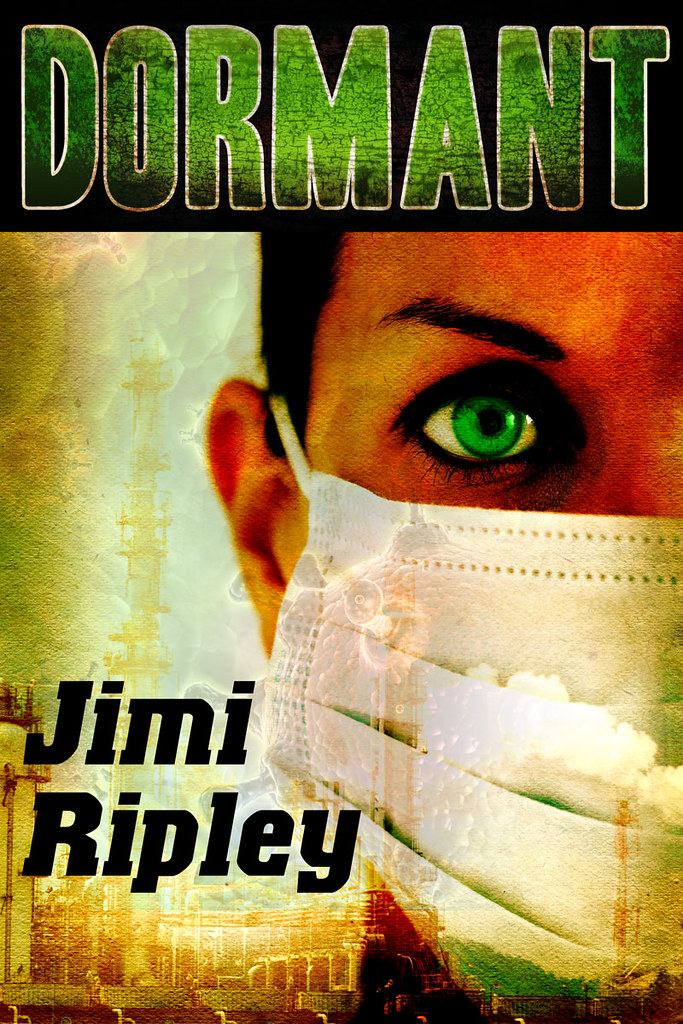
    Today was a banner day on the path toward publishing my first novel. My book now has a cover!

    (Click to view a larger version.)

    Working with Streetlight Graphics was painless and quick. The artist, Glendon, combined all of the elements that I requested, readily incorporated changes, and presented me with two different designs. The winner is above (and at right, but you can't zoom in on that one).

    In honor of the cover, I created a Work in Progress page for my book information. You can check there for a quick update on my rewrites, via my progress tracker. I will also edit the page with changes to my blurb; it still needs work. Below is the draft version.

    Draft blurb: Jackie Davenport graduated with a M.A. in Journalism, dropped an abusive boyfriend, and landed a coveted job writing for the Houston Chronicle. Her assignment is small: travel to the oil refinery in Sundown, Texas to research high gas prices. The outbreak that obstructs her research is more than “just the flu.”

    Unable to merely observe, Jackie becomes a catalyst in local containment efforts, but influenza jumps outward, escaping local and national containment measures to cause a pandemic. At her sister’s sickbed, Jackie must choose whether to trust a man she had tolerated only for her sister’s sake—brother-in-law and absent-minded physicist, Preston Black. Trust is not something she does well, at least not since her self-image was smashed along with her heart.

    To stop the flu pandemic from sending the population to the brink of extinction, journalist Jackie Davenport must uncover the truth behind the government's secret time travel experiment. As Director of the experiment, is Preston friend or foe? Humanity’s future hangs on Jackie’s courage and ability to convince with the scoop of a lifetime

    Please comment with blurb suggestions and edits.

    Tuesday, May 31, 2011

    Book Rewrite Progress Tracker (v1)

    I just spent the afternoon working on rewrites for Dormant. So far it hasn't been nearly as painful as I feared, but I have a long way to go. I suspect that it will become more challenging to maintain story pacing as the weight of the book unfurls behind me. (It's always hard to cut material.) To keep my motivation going, I will post and update this tracker as I make progress through the manuscript. I plan to create a dedicated tracker location on this blog when I have my book cover. This is to get me started.


    2/34 chapters

    Not much color in the progress bar at this point, but it will happen. I have five months to go.

    Monday, May 30, 2011

    H1N1 influenza pandemic, vaccine, and my part in the response

    My fascination with nearly all things medical probably started with my mother’s stories of her work as a Labor and Delivery nurse. When I read my first account of the 1918 influenza pandemic, that fascination turned to stories related to the epidemiology of how viruses spread and the public health measures taken to prevent, when possible, or contain when not. I knew that I would see a flu outbreak in my lifetime, but I never expected to have such a close experience with the response efforts.

    H1N1 Influenza A
    When I began my work as a public health information specialist, I was thrilled to combine my interests with my skills. That is how, in early May 2009, I found myself elbow-deep in disseminating information related to the H1N1 pandemic. I was the smallest cog in a tremendously complex response effort—much of it done by people whose expertise I could grasp just enough to admire. Seeing the flu response unfold from inside a public health laboratory was everything and nothing like I had imagined.

    H1N1 flu is a novel form of the influenza virus that first sickened humans in the United States in April 2009. In June, the World Health Organization declared that the widespread H1N1 outbreak, while unexpectedly mild to moderate, had developed into a pandemic, the term for a global outbreak.

    A shortfall in influenza vaccine stocks exacerbated the 2009 pandemic. Because I was pregnant at the time, I was at the top of the vaccination priority list issued by the Centers for Disease Control and Prevention (CDC) (update 11/9/20: The priority list link for the H1N1 outbreak in 2009 has expired, but here is updated CDC info on the influenza vaccine and pregnancy). Despite this priority, there was no vaccine available. While working long hours at the flu response, my husband and I tried numerous sources to locate vaccine, including my Ob/Gyn, Primary Care Provider, work (normally a good source to promote public health preparedness), and local clinics. Months later, we finally found a source. After screening to ensure that I was a member of the priority group, a small city clinic administered the vaccine on November 5, 2009.

    The beginning of December 2009 marked a real turning point for those working hard to effectively allocate the limited vaccine supply. With H1N1 vaccine availability increasing, the priority groups were expanded. By mid-December, availability again expanded. Health departments issued news releases urging everyone to get the H1N1 flu vaccination. The crisis was over.

    The flu pandemic response in Dormant is based, in part, on my experiences during the H1N1 outbreak.

    Saturday, May 28, 2011

    Writing a Tagline: Does this grab your attention?

    A tagline is a short statement that explains your book to others. I have used this: "A science journalist must use her investigative skills to stop an influenza pandemic caused by a time travel experiment." Descriptive, yes, but it is also a bit awkward and lacking that certain something that makes it shine.

    This is a stab at a better tagline.

    Before Sundown, reporting was just her job. No longer Dormant, the flu made it personal.

    Science journalist, Jackie Davenport, must uncover the truth about a time travel experiment in order to stop the pandemic.


    Sunday, May 29, 2011

    Edited tagline:

    To stop the flu pandemic from sending the population to the brink of extinction, journalist Jackie Davenport must uncover the truth behind the government's secret time travel experiment. Humanity’s future hangs on Jackie’s courage and ability to convince with the scoop of a lifetime.

    Tuesday, May 31, 2011

    A more succinct version:

    To stop a pandemic, Jackie Davenport must uncover the truth behind a secret experiment.

    Does this grab your attention and make you want to read my book?

    Friday, May 20, 2011

    Identity Crisis: Choosing a Book Title

    My book is going through an identity crisis. Pulling my manuscript out of long hibernation has its benefits. Titles and names are not my strengths, and it shows. I didn’t see it before, but I now realize that not only does my novel need a new title, but in several cases my characters have also outgrown their names.

    Book Title


    As mentioned in a previous post, I need a new title. I really like Crude Awakening, but I wish there weren’t several other books with similar titles. That the other books are primarily nonfiction is at least some help, but it is also the reason for my reservations on a title that would otherwise be perfect. These are the result of brainstorming with fellow writers who are, mostly, much more talented in the title department than I am. I have included the more tongue-in-cheek suggestions to keep things fun.
    • Sundown
    • Near Sundown
    • Before Sundown (But most of the story happens after Sundown—the town, I mean.)
    • Sundown Flu
    • Deadline
    • Time Release
    • Dormant
    • Pandemic
    • Viral
    • Resurrected
    • Jurassic Yack (*groan*)
    • Terminal
    • Incurable
    • Time Pandemic
    • Even Dinosaurs Get the Flu (Brilliant! *lol*)
    • Time Kills
    • Killing Time
    • Deadline at Sundown (Too much like a Western?)
    • Time’s Up
    • Time’s Up at Sundown (I’m not such a big fan of apostrophes in titles.)
    • Dead Crude
    • Deadline Crude
    • Crude Deadline
    • Dateline: Pandemic (I prefer to avoid the colon, unless a subtitle is necessary.)
    • Crude Lies
    • Crude Exposure
    • Under Pressure (The Queen song springs to mind.)
    • Virulent
    • The Source
    • Surviving Time
    • Carrier
    • Time Strain
    • Time in a Bottle (Anther song)
    • Crude Deception
    • Crude Timing
    • Suspended Time
    • Crude Awakening
    • Texas-T and the T-Rex (*lol*)
    • Drilling for Trouble
    • Refining Time
    • Refining Death
    • Refining Lies
    • Pandemic Time
    It helps to see them in a list. I even came up with a new idea. Please vote in my title poll. (Expired)

    Character Names


    I reworked character names in a fun brainstorming session with my friend/sounding board, a.k.a. hubby. It helps to say names out loud. I also did a few searches on popular baby names by year, based on the character’s age, and name meanings. Meet my main character.

    Newbie science journalist, Jacqueline Nicole Davenport, doesn’t feel she lives up to her elegant name. She prefers the snappiness of the nickname Jackie. She is quick to throw out an interview question, and then she mostly keeps her mouth shut; you learn a lot by listening. Just don’t push her too far.

    And my most important secondary character.

    Preston James Scott, PhD, physicist and director of a secret research project in time travel, doesn’t worry much about his name one way or the other. Preston answers readily to his given name, Dr. Black, or Director, as long as you let him get on with his research. "Exactly. Have you seen my glasses?”

    Tuesday, May 17, 2011

    Doing the Math: Calculating Time to Manuscript Completion

    That’s right, I said "doing the math," which will shock family and friends. I made it through classes like Algebra and Geometry only because of my personal tutor, a.k.a. sister.

    Based on information gained from a professional edit of the first 3,000 words, my years spent writing and editing academic and scientific material are showing. My book needs work on pacing, to remove or re-write slow spots, and added reality through increased use of scents, tastes, and sounds. My application of all of these was somewhat sparse. I at least got the story line, visuals/settings, dialogue, and character development down.

    I’m going to be generous and give myself four months to finish the project. My manuscript has approximately 83,500 words, divided into 34 chapters. Editing/re-writing roughly two chapters a week will get it ready for editing and Beta readers by September. With a 13-month-old toddler, that means burning the candle at both ends—already my normal state of living—but it is an achievable goal.

    During this process, I also need to find an affordable graphic artist and a copyeditor. I would like to have cover art in three to four months, and I will need an editor in October. Any takers? Please post recommendations or your own contact/website, if you have skill in that area.

    Monday, May 16, 2011

    What's in a name? Help title my book.

    My science fiction thriller has had two working titles. Biomass is too scientific and Out of Time is over-used, so I am in the process of selecting a new name for my book. Fellow writers on the Kindle Boards gave me several suggestions, and my husband contributed another. The top two contenders are Dormant and Crude Awakening. Based on the blurb below, what is your suggestion?

    Warning: I left out part of the story twist and the resolution, but there are spoilers ahead.

    A science journalist must use her investigative skills to stop an influenza pandemic caused by a time travel experiment.

    Jackie Davenport graduated from college minus an abusive boyfriend and with a coveted job writing for the Houston Chronicle. Her assignment is small: travel to the oil refinery in Sundown, Texas to research high gas prices. The outbreak that obstructs her research is more than “just the flu.”

    Unable to merely observe, Jackie becomes a catalyst in local containment efforts, but influenza jumps outward, escaping local and national containment measures to cause a pandemic. At her sister’s sickbed, Jackie must choose whether to trust a man she had tolerated only for her sister’s sake—brother-in-law and absent-minded physicist, Preston Black. Trust is not something she does well, at least not since her self-image was smashed along with her heart.

    Jackie’s reality shifts when Preston admits directorship of a top-secret research project in time travel. Risking both her health and her burgeoning career, Jackie enlists Preston’s help to uncover proof of a cover-up spanning time and rank. Now Jackie must gather her new-found courage as she presents the scoop of a lifetime.