Showing posts with label science fiction. Show all posts

Monday, August 8, 2011

Book Review: Dead Men Don't Cry, by Nancy Fulda

Dead Men Don't Cry, by Nancy Fulda, is an eclectic collection of 10 science fiction short stories. I don't often read short story collections, but I enjoyed this one. I received it as a review copy via Smashwords. Some of the stories took me on adventures while others made me think, even as they made me cringe. Here's a brief rundown of the stories, without giving away too much.

Pastry Run - This was a fun romp of an adventure, all in the name of a fresh morning pastry. Forget Paris to New York and try Charles de Gaulle to the Sea of Tranquility. This story quickly pulled me into the collection.

Dead Men Don't Cry - Whodunit with a science fiction twist and a bang of an ending. It has been a while since I read a mystery, but this took it to the next level by introducing my beloved science fiction. I enjoyed the experience, even though I guessed the solution before the main protagonist.

Blue Ink - Six-year-old Jason doesn't like the funny smells, the scratchy hospital gown, or the idea of being cloned, but all the grown-ups say he's very fortunate. Nancy does a good job of addressing a complicated debate through the eyes of a child. I thought this story was fascinating.

Backlash - Eugene's much-anticipated daddy/daughter dinner becomes too exciting with the addition of an unwelcome boyfriend and a strange fortune. I loved the take on time travel in this story.

Monument - A traveler on the way home from Thanksgiving stops to stretch her legs and finds more than she bargained for. This one made me think, though it almost felt like the message was being shoved down my parched throat.

Tammi's Garden - Tamela lives in caverns that protect her from the bad air above, if you can call barely surviving living, but at least she has her mother. That is until she wakes in an almost idyllic garden. But which is the dream? Read this and let me know if you can answer the question.

All Praise to the Dreamer - A new mom's pleasant day turns deadly serious as she tries to save the life of her two-month-old baby. This one reminded me of The Twilight Zone, but I really disliked it. That might have something to do with the fact that I'm a fairly new mother myself.

The Breath of Heaven - Computers grapple with emerging sentience and how they should follow their directives to establish a human colony. Does the ideal human operator exist? Sacia is an AI with an interesting and surprisingly likable point of view. I loved this story.

Ghost Chimes - Ghost chimes ringing at 3AM make Alicia wish that she had unplugged the machine, even as she settles the glasses on her nose to answer her mother's call. Her mom can be a bit nosy sometimes, but that's not the half of it. I didn't like this story, though the concept was clever.

A New Kind of Sunrise - Young Mikki finds a dying stranger. Her clan chief agrees to take him in, little knowing the profound impact the man will have not only on Mikki but also on the entire clan. This story built a rich and believable world in relatively few pages. I loved it and look forward to reading more in future.

Even though I didn't like all of the stories, even those made me think. Dead Men Don't Cry is a highly enjoyable, well written collection. I look forward to reading more of Nancy's writing, particularly when she releases her upcoming novel.

Wednesday, July 27, 2011

Physicists Cast Doubts on Time Travel

My time travel dreams have been shattered. Physicists just proved that I cannot jump into Doc's DeLorean, accelerate to 88 miles per hour, and activate the flux capacitor to travel through time. (The flux capacitor is "what makes time travel possible," according to Dr. Emmett "Doc" Brown in Back to the Future.)

Despite previous speculation to the contrary, single photons cannot travel faster than the speed of light. Physicists at the Hong Kong University of Science determined this when they achieved the previously impossible by measuring an optical precursor. Optical precursors are the waves that precede photons in a material. Trying to picture photons on their correct scale is hard (leaving aside the even more complicated fact that photons don't actually have a defined, single size). Feel free to join me in imagining the optical precursor as the wind you feel rocking your car at the passing of a semi truck.

Theoretical debates raised the possibility of time travel 10 years ago, when scientists discovered superliminal (faster than light) propegation of optical pulses in some specific medium. Though this was later found to be an opitcal effect, researchers still speculated that a single photon might exceed light speed. The Lead physicist on the project, Shengwang Du, was determined to end the debate. His team managed to separate the optical precursor from the rest of the photon wave packet, prooving that Albert Einstein was right when he theorized that nothing in the universe can travel faster than the speed of light.

Not that I personally have the brain power to question Einstein. My brain doesn't work that way. Maybe that's good. It helps the suspension of disbelief required while watching Back to the Future, so that I can at least re-visit the fun to be had in the first and third movies in the trilogy.

Where does that leave the time travel in my book? Time travel by other means has not been entirely ruled out. I'm sticking with my wormhole theory. Imagination still needs the occasional reason to roam.

Thursday, June 30, 2011

Writing Prompt: Photo of a Unique Texas House

Here's your writing prompt.... Study this image for a few minutes and write about it.


You're done already? Okay, I'll take your word for it. Personally, I blame a wormhole. Anything can happen in Texas!

What's your story?

Here's what really happened. Artists Dan Havel and Dean Ruck took two houses that were about to be demolished and created a temporary art installation. They peeled off the skin of the buildings and used the siding to build a vortex that went through both buildings.

Links to detailed information:
And more pictures....


What! You're still here? Okay, you visual folks can see even more pictures on this Art League Houston web page.

Tuesday, June 28, 2011

Crude Science Behind Dormant

A crude oil refinery plays an important part in my novel, Dormant.

Oil Refinery
Mention crude oil refining and most of us picture a sprawling industrial complex with miles of piping. Taken a step further, our vague knowledge probably hints at a process that requires intense heat. This was my level of understanding, until I conceived an idea for Dormant that required more research.

The most common method used in crude oil refining is fractional distillation. In this case, fractions are the component parts of crude oil. The crude is passed through a furnace and then into a fractional distillation column where the heat allows the hydrocarbons to separate. The lightest products with the lowest boiling point rise to the top and the heaviest with the highest boiling point sink to the bottom of the column. That means that lighter hydrocarbons, like gas, exit from the top of the column while heaver ones like lubricating oil, paraffin wax, and asphalt exit at the bottom. Further processing in the form of catalytic cracking is applied to intermediate products, such as gasoils, to create the fuels that are blended to form gasoline. This refining method is effective, but there are numerous byproducts that cause safety and environmental concerns.

PetroBeam's Cold Cracking Column
An new method of crude oil refining is called cold cracking. Cold cracking is done at room temperature. It uses beams of high-energy electrons (I imagine a Star Trek phazer—zap, zap) to transform the thick parts of crude oil into petroleum products, e.g. oils and gasoline, thin enough to pump through a pipeline. One of the benefits of cold cracking, over the traditional fractional distillation method, is that a lot of oil fields have oil that is too thick to pump. Current methods of thinning these deposits are very expensive.

The reason that cold cracking is not more widely used is because of radiation’s propensity to make things worse. Hydrocarbons are long chains of molecules—the longer the chain, the more viscous. Sometimes the chains broken by the electron beams cross-link to a neighbor, which leads to a stagnant mess of interconnected chains. The process is actually used to toughen tires and a certain kind of plastic shrink-wrapping. There is no such thing as scientific failure; apparent failure often creates an opportunity that simply requires re-working into an application different from what was originally intended.

The problem of cross-linking has been solved since 2005. Researchers, working for a company called PetroBeam, created a proprietary process that can be used in oil refineries to turn heavy fuel oils into things like gasoline and diesel.

Enough nerd speak. I applaud you if it you read this far. I promise that Dormant does not include all of the above technical details, but my research did help drive the plot.

The Science Behind Dormant

Tuesday, June 21, 2011

Time Travel Science Behind Dormant

Part two of my series on the science behind Dormant is about time travel.

Everyone time travels. We age and the planets move around the sun, but that’s not the stuff of science fiction. Despite our measurements of time on the face of a clock, it does not flow at a constant rate. Time is relative. In addition to the spatial dimensions of length, width, and depth, the most crucial fourth dimension is time. I’m sure that other Trekkies out there have heard of the space-time continuum. Time can’t exist without space and space can’t exist without time.

Time travel to the future has been proved. Gravitational time dilation occurs because time passes faster in orbit. Global positioning satellites accrue an extra third-of-a-billionth of a second daily. Personally, that kind of miniscule time difference is hard to grasp, but it does exist. Gravity is a curve in space-time, according to Einstein’s theory of general relativity; gravity pulls not only on space but also on time.

Speed is also a factor in time. The closer you get to the speed of light, the more slowly time passes. The illustration postulates a “twin paradox.” One twin goes off on a voyage close to the speed of light and the other one stays home. When the space-traveling twin returns home, he has aged only a little, while the twin at home has aged at a regular pace.

Time travel to the past is under debate. A variety of methods have been proposed for how this might happen (e.g., cosmic strings). I like the wormholes in Star Trek. When a wormhole pops up, you know the crew is off on an adventure. Wormholes are a hypothetical tunnel connecting two regions of space-time. A wormhole can bridge two parts of one universe or two completely different universes. “Wormholes are the future, wormholes are the past,” said physacist Michio Kaku, author of Hyperspace and Parallel Worlds. The challenge comes in punching a hole in the fabric of space-time. The energy required would be enormous, equal to the energy of an entire star.

Physicists who doubt the possibility of time travel to the past cite string theory, which views matter in a mind-boggling 10 dimensions. I can’t wrap my brain around that many dimensions, so I have to take their word for this. However, the theory says that if you are very optimistic and fiddle with the wormhole openings, you can change the shortcut to go not only from one point to another in space, but also from one moment in time to another. The problem is that despite time travel to the past being theoretically possible, it is practically impossible. We just don’t have the technology.

So what about the grandfather paradox of science fiction fame? If you could travel to the past and murder your own grandfather, do you cease to exist? The causality chain that made you doesn’t exist, so you don’t exist. Perhaps the answer is that you can’t murder your own grandfather because your gun jams, or he bends over to tie his shoelace.

My attempts to wrap my brain around the topic of time travel included reading books like Black Holes, Wormholes, and Time Machines, by Jim Al-Khalili. Many of the physics concepts are beyond me, because my brain just does not work that way, but I learned enough to flesh out the time travel experiments of my physicist character, Dr. Preston Scott. His research creates a unique kind of trouble for Jackie Davenport.

The Science Behind Dormant

Wednesday, June 15, 2011

Short Story Review: Field Trip, by Jody Wallace

Field Trip, by Jody Wallace, is an entertaining story with all the cute annoyances of a group of children on a museum field trip.

I’ll admit it. I was drawn to this story by the cover. Though not exactly the same, the font reminds me of Star Trek: The Next Generation. (Yes, I’m one of those geeks.) I received a copy of the story through an offer on Jody Wallace's blog, Writer and Cat.

Miss James is a third grade teacher escorting her students to the Space Station Freedom Museum and Amusement Park. The trip is not going well. Handsome but inept, the Zhie tour guide, Sergeant Chamblin, “…was obviously not used to holding the attention of twenty Human and Zhie third graders from the Integrated Public School System of Earth on their annual field trip.” The kids are restless, and restless children, whether human or alien, are a recipe for disaster. Miss James uses all of her 12 years of teaching experience to maintain order as she mentally composes an email satisfaction survey complaining of Chamblin’s inept performance. A malfunction in the museum’s shabby shuttle simulator does not help matters.

The tour of the now defunct space station includes a backward look at antiquated technology—actually advanced by today’s standards—that gradually builds a picture of Zhie/Human first contact. The children’s antics are believable. “To make matters worse, [Chamblin] sometimes patted the kids on the shoulder, head or back when he didn’t know the answers to their questions.” This patronizing behavior, among other idiosyncrasies, registers with Miss James. She sometimes tries to give the guide pointers while continuing to compose her growing list of complaints.

Then their field trip takes an unusual turn. I recommend that you grab a copy to find out what happens. The world building is effortless and believable. The story is well told and edited, and the writing is excellent.

Field Trip perfectly illustrates why I prefer books over short stories. I want more, including development of some of the fascinating hints we get about Miss James and Sergeant Chamblin. Unfortunately, Jody Wallace does not have any other published works in this genre, let alone this universe. Jody, please write more!

Highly recommended.

Monday, June 13, 2011

Book Review: Helper12, by Jack Blaine

Helper12, by Jack Blaine, is a fun read set in a fascinating dystopian society, but the setting is not what pulled me in. I was drawn to the main character. Helper12 is a believable and engaging young woman. Designated as a Baby Helper when she was very small, she has no memory of the details, just the H tattooed on her arm, with the hint of a sloppily removed B beneath.

The synopsis, which I first read through the Kindle Boards forum, caught my attention. I downloaded a sample as soon as it was available, on June 1, 2011. Two days later I read the sample and immediately purchased the book so that I could keep reading.

Helper12 is one of many similarly designated Baby Helpers in the Pre Ward where babies spend six months before being tested and tracked for vocations. She is mostly content with her situation. She has never known any other life, and she knows that being a Breeder would have been worse. There’s just one thing, Helper12 has a secret—she’s drawing.

At the end of one of Helper12’s shifts, the Sloanes arrive. She hears the young man address the older pair: “Mother. Father. It’s a real live family unit, right here in my Ward.” Only rich society members can afford family units, and this one is here to “adopt” Baby4. They need a Nanny for their new son, so they make a deal with the Director and walk out owning Helper12. A helper outside her designated task can be reported as “Negligent. As in, not present for one’s assigned task. As in, absent without permission. As in…life sentence.”

The first-person narration is one that I don’t often encounter in my reading, so it was a unique almost surprise each time I returned to reading the book. The unusual use of present tense verbs added to the effect.  I found Helper12’s naiveté believable. Her view of life is narrow because of her station and task-oriented upbringing. We learn of her stilted education as we absorb information about her life, first in dorms and now in her cube residence in a worker slum. “These walls have protected me against other things, too. The loneliness of my existence, the helpless feeling of knowing I will repeat my steps each day, that I will do as I am bid, do what I have been trained to do, until I can’t do it anymore.”

Helper12 has never known love. Despite this, she grows to love Baby4, named William by the Sloanes. Helper12 has already secretly named him Jobee.

The Sloanes also have a secret. Secrets build to put Helper12 in a situation where she has important choices to make, if she can learn to trust.

Helper12 is not a scholarly or in-depth work, nor is it meant to be. The setting is well developed with a strong narrative voice. The story took me on an adventure with plot twists and character development that held my attention from the beginning and did not disappoint with the satisfying conclusion. Highly recommended.

Wednesday, June 8, 2011

The Bibliophile’s Wonderful Dilemma

Hello, my name is Jimi, and I’m a bibliophile. I generally read two or three very different books at a given time. For example, I am currently reading Self-Editing for Fiction Writers (how to), by Dave King and Renni Browne; Helper12 (science fiction), by Jack Blaine; and A Planet of Viruses (science), by Carl Zimmer. Oops, make that four books in progress. I almost forgot Panic in Level 4: Cannibals, Killer Viruses, and Other Journeys on the Edge of Science, by Richard Preston. (I’m a little scared to read the last chapter about Lesch-Nyhan syndrome.)

I never have enough reading time for one book, let alone several. I shoehorn my reading into my already packed schedule—caring for my family (my 14-month-old is fun but challenging, especially when he is sick), working full time, writing, and the other sundries of daily life. Notice that I haven’t even listed exercise, though I should. I miss kickboxing in particular, but I also used to do the occasional sprint distance triathlon or run (5K and 10K) for my own amusement and motivation.

Don’t get me wrong. I’m not complaining. I love my life. I have an amazing close-knit family and so many interests that I can’t ever imagine being bored. I still wish that my reading time wasn’t largely restricted to my lunch hour.

My reading list is only getting longer. I really should grab a copy of Reading Like a Writer, by Francine Prose. I’m sure that absorb the mechanics of what I read on some level, but I probably need the reminder to pay more attention to the nuts and bolts, versus the story. I want to resume reading Polio: An American Story, by David M. Oshinsky. The book combines a look at the history of the 1940s and 1950s as it relates to polio, along with Franklin D. Roosevelt’s part in public awareness, and the development of research into a vaccine.

I have been eyeing Typhoid Mary: Captive to the Public’s Health, by Judith Walzer Leavitt, but I’m waiting on a Kindle version. Also on my “To be Read” list are The Cholera Years, by Charles E. Rosenberg; The BetterPhoto Guide to Digital Photography, by Jim Miotke; Cyberdrome, by Joseph Rhea; Write2Publish (The Changing Face of Publishing), by Robin Sullivan; and…. The list goes on. Choosing my next read is a wonderful dilemma.

At least most of these books are now available on Kindle. My bookshelves and my back thank me for switching to my compact eReader. I enjoy the wealth of books available for my reading pleasure, and I plan to add my own Dormant to the collection in January 2012.

At the risk of adding to my TBR list, what books are you currently enjoying?

Thursday, June 2, 2011

Book Cover and Draft Blurb

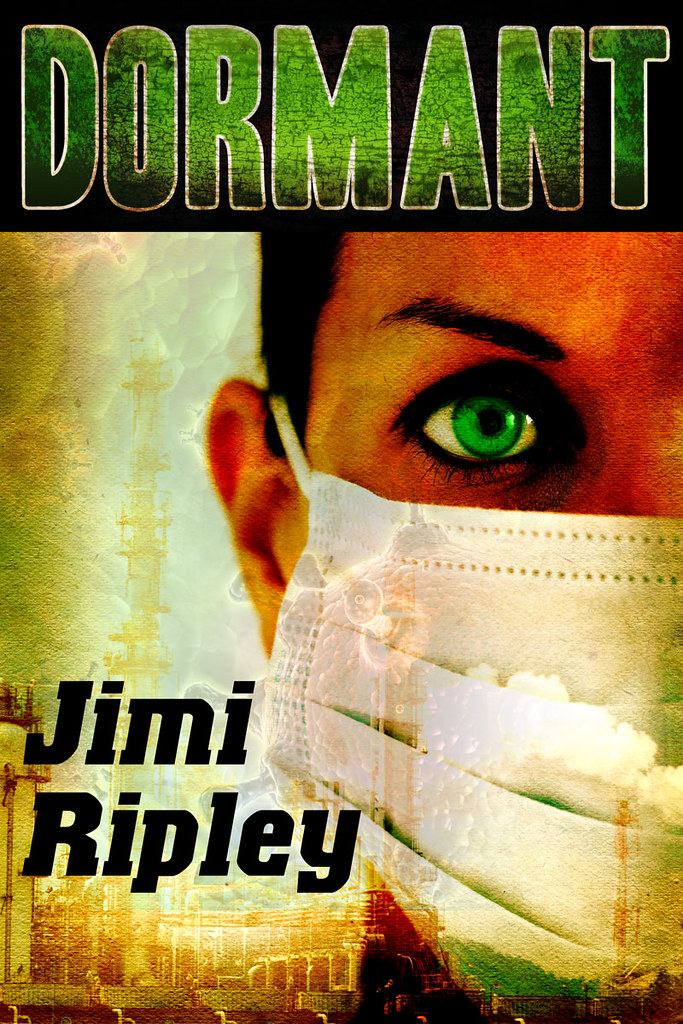
Today was a banner day on the path toward publishing my first novel. My book now has a cover!

(Click to view a larger version.)

Working with Streetlight Graphics was painless and quick. The artist, Glendon, combined all of the elements that I requested, readily incorporated changes, and presented me with two different designs. The winner is above (and at right, but you can't zoom in on that one).

In honor of the cover, I created a Work in Progress page for my book information. You can check there for a quick update on my rewrites, via my progress tracker. I will also edit the page with changes to my blurb; it still needs work. Below is the draft version.

Draft blurb: Jackie Davenport graduated with a M.A. in Journalism, dropped an abusive boyfriend, and landed a coveted job writing for the Houston Chronicle. Her assignment is small: travel to the oil refinery in Sundown, Texas to research high gas prices. The outbreak that obstructs her research is more than “just the flu.”

Unable to merely observe, Jackie becomes a catalyst in local containment efforts, but influenza jumps outward, escaping local and national containment measures to cause a pandemic. At her sister’s sickbed, Jackie must choose whether to trust a man she had tolerated only for her sister’s sake—brother-in-law and absent-minded physicist, Preston Black. Trust is not something she does well, at least not since her self-image was smashed along with her heart.

To stop the flu pandemic from sending the population to the brink of extinction, journalist Jackie Davenport must uncover the truth behind the government's secret time travel experiment. As Director of the experiment, is Preston friend or foe? Humanity’s future hangs on Jackie’s courage and ability to convince with the scoop of a lifetime

Please comment with blurb suggestions and edits.

Wednesday, June 1, 2011

Short Story Review: Not with a Bang, by A. Andrew Tanita


Not with a Bang, by A. Andrew Tantia, is funny, irreverent, and poignant. 

Set in an ordinary extraordinary garden, the story is a short comedy featuring John Wayne (no relation) and Robin (who inexplicably has no last name). “This otherwise unremarkable patch of land had perhaps just one distinguishing characteristic: it was the last garden left from what had formerly been the planet Earth and was now instead the loose collection of rocks and debris Earth.”

Faced with being the last men alive (“two Adams and no Eve”), they prepare their last words: “The world began with a garden. How appropriate that it should end in one.” A thundering voice halts them as they are about to end it all. MAL, their self-aware space ship, offers an alternative, and a confession.

I will stop here at describing the plot. Rest assured, the fun continues all the way to the end.

At first, I paused often to pay picky attention to the over-done dialogue attributions (use of excessive synonyms for “said” is a pet peeve), but as the story progressed I was able to forgive the majority of these distractions.

I wanted to give this story a Recommended rating, but I will have to settle for recommend with the above-noted reservation. This is a fun read for those who enjoy comedy science fiction with an end-of-the world bang.

Rating: Recommended with reservations

(Rating system: Recommended with reservations, Recommended, Highly recommended. I will not review books that I find unreadable.)

Tuesday, May 31, 2011

Do book covers influence your reading decisions?

Book covers are much on my mind as I work with a graphic artist to create my own cover. I have always been of the “less is more” design camp, but that may be hard to do while branding the book as science fiction.

Why do publishers think that book covers that are busy, at best, or garish, at worst, sell science fiction books? I have been a science fiction buff since high school, but I was always vaguely embarrassed to actually be seen reading books from the genre. Oddly enough, I am drawn to science fiction because of the science. A good science fiction author takes the science and molds it into a “what if” scenario that stretches the facts just a bit, or a lot, further. I look for the reality shift when I suddenly see the story in a totally different light—the “ahha” moment. Beyond engaging my imagination, this kind of recreational reading helps to spur creative thinking.

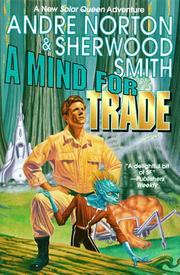
I recently became aware of the parody site Good Show Sir: Only the Worst Sci-fi/Fantasy book covers. For example, the comment posted with the cover for A Mind for Trade, by Andre Norton and Sherwood Smith: “Sing with me, little one!  ’I-I-I’m a lumberjack and I’m okaaaay…’” Funny, yes, but I think the man's pose may be the least of the problems with this particular book cover.

Either I am an unusual science fiction buff, or publishers have it all wrong as they compete to put the most sensational attention-grabbers on a cover, whether or not it reflects the story. I recently read a blog illustrating the point. In Of Covers and Frustrations, author Jane Fancher is talking about the cover for one of her hard science fiction books.

I wanted a computerchip background theme running through all three covers. For the first book, I wanted the foreground to be the Miakoda Moonrise…a double moonrise over an alien landscape that is a key moment in the book with one or more of the characters in the image. Barclay gave me a lovely computer chip…which the art department completely covered with type. A double moon, the smaller of which the art department completely obscured with my name, thus eliminating the “alien”. And a secondary female character beside a fire because statistics said female figures sell.

Not even the covers on a notable book like Stranger in a Strange Land, by Robert A. Heinlein, escape re-imagining. I must admit that the 1973 printing may be an illustration of a case where less is not more.
Current
1961
1973
(As an aside, I came across a mesmerizing infinity animated gif, called Moving Water, while searching for the above cover images.)

What makes a good science fiction book cover?  Do book covers influence your reading decisions?

Thursday, May 26, 2011

Heinlein "On the Writing of Science Fiction"

Robert A. Heinlein is one of the great masters of science fiction. His novel Stranger in a Strange Land, winner of the 1962 Hugo Award, was the first science fiction book to hit the best seller lists. His work is largely responsible for my own introduction to the genre and, as such, is influential in my own writing.

In a 1947 essay he published the following rules "On the Writing of Science Fiction."

Heinlein's Rules
  1. You must write.
  2. You must finish what you write.
  3. You must never rewrite (unless to editorial demand, and then only if you agree)
  4. You must mail what you finish.
  5. You must keep the story in the mail until someone buys it.
My mind balks at the third rule. I am the queen of rewrites. Rewrites make the story better, don't they?

I just finished my first flash fiction story. Flash fiction is fiction of extreme brevity. As of this moment, I only exceeded the word count by 19 words. Not bad for this loquacious writer.

In the theme of flash fiction, and in an attempt to honor Heinlein's advice, I am going to keep this blog brief—time to walk away from the keyboard.

Tuesday, May 24, 2011

Book Review: Fuzzy Nation, by John Scalzi

John Scalzi ranks as one of the few science fiction authors whose books have earned my automatic purchase. His tongue-in-cheek humor, unique characters, and complex plot twists caught my attention from my first read. Old Man’s War had me on the first line: “I did two things on my seventy-fifth birthday. I visited my wife’s grave. Then I joined the army.”

Fuzzy Nation appeared on my Kindle in early May, thanks to my pre-order. This book is not set in Scalzi’s usual universe; it is as a writing exercise/tribute to a 1962 novel by H. Beam Piper, Little Fuzzy. Scalzi basically took the story, characters, and plot and re-wrote it, incorporating new characters, elements, and events. Because of this, Fuzzy Nation is different than his usual books in plot, tone, and pacing, but all of it with Scalzi’s usual flair for reveals and humor. 
Minor Spoiler Alert

Scalzi’s book draws you into the fuzzy universe from the beginning. By paragraph two, main character Jack Holloway is reading the riot act to his partner, Carl, for his inability to remember everything he has been taught. It is only after this diatribe that you learn Carl is in fact his dog. Carl is a very talented dog. He does not like boom, but he (allegedly) enjoys detonating explosives—for prospecting purposes only, of course. Holloway is a contractor working for ZaraCorp, a company intent on stripping the planet of resources, and yet they take a dim view of dogs detonating explosives.

We soon meet other characters. His beleaguered boss resents his lawyer grandstanding (Holloway is a lawyer turned prospector). His ex-girlfriend and company biologist dumped him for claiming, in a hearing, that she lied about Carl detonating explosives. Through them we learn that Holloway isn’t always a likable person.

Changing fortunes beset Holloway, and we alternately cheer and bemoan his fate. As a character, I found Holloway hard to sympathize with. Sometimes he seemed to be doing the right thing, but he always displayed a disturbing lack of morals.

A creature breaks into Holloway’s cabin. He looks through the window and sees a cat staring back at him. “It took him a second to remember that he didn’t own a cat. It took him a second after that to remember that cats didn’t usually stand on two legs.” Holloway names the cat things fuzzys.

The rest of the tale is taken up with determining if the fuzzys are very smart animals or people. How this is determined, and Holloway’s real motives, are worth the read. Along the way we find out why Holloway is prospecting instead of working as a lawyer. Is Holloway a good or bad person? Will the fuzzys be exterminated?

As a cat person, I enjoyed the fact that the “aliens” (the fuzzys) appeared to be extremely intelligent cats. I felt an immediate affinity for the creatures. My reaction to Holloway was more ambiguous throughout. Usually I, as the reader, come to empathize with the main character on some level. Being unable to do so in this book was somewhat disturbing, though ultimately refreshing for its novelty.

Fuzzy Nation has an involved and satisfying ending; however, it’s the ride, with its reveals and twists, that makes the story. While this book is certainly no Old Man’s War, it is a thoroughly fun, quick read.

Rating: Recommended

(Rating system: Recommended with reservations, Recommended, Highly recommended. I will not review books that I find unreadable.)

Monday, May 16, 2011

What's in a name? Help title my book.

My science fiction thriller has had two working titles. Biomass is too scientific and Out of Time is over-used, so I am in the process of selecting a new name for my book. Fellow writers on the Kindle Boards gave me several suggestions, and my husband contributed another. The top two contenders are Dormant and Crude Awakening. Based on the blurb below, what is your suggestion?

Warning: I left out part of the story twist and the resolution, but there are spoilers ahead.

A science journalist must use her investigative skills to stop an influenza pandemic caused by a time travel experiment.

Jackie Davenport graduated from college minus an abusive boyfriend and with a coveted job writing for the Houston Chronicle. Her assignment is small: travel to the oil refinery in Sundown, Texas to research high gas prices. The outbreak that obstructs her research is more than “just the flu.”

Unable to merely observe, Jackie becomes a catalyst in local containment efforts, but influenza jumps outward, escaping local and national containment measures to cause a pandemic. At her sister’s sickbed, Jackie must choose whether to trust a man she had tolerated only for her sister’s sake—brother-in-law and absent-minded physicist, Preston Black. Trust is not something she does well, at least not since her self-image was smashed along with her heart.

Jackie’s reality shifts when Preston admits directorship of a top-secret research project in time travel. Risking both her health and her burgeoning career, Jackie enlists Preston’s help to uncover proof of a cover-up spanning time and rank. Now Jackie must gather her new-found courage as she presents the scoop of a lifetime.